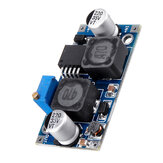
US$8.99
- Wszystkie recenzje(235)
- Obrazy
- Wideo(0)
Sortuj według:
Recenzje tylko z Twojego kraju (Poland)
|
Pokaż oryginał
Część recenzji została przetłumaczona automatycznie.
-
 mullecyVIP3CH10/11/2016
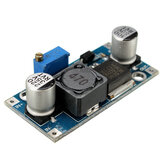
Works as specified if you stay in the limits. Just a little warning: during my tests, I lowered the input voltage and under 3.5V, the circuit doesn't cut but becomes crazy and the output (that was set to 15V with the pot.) jumps to 40V with no load. With a 2k resistor at the output, it only goes to 30V. Of course, this is under the specified minimum voltage, but for solar applications, how can you guarantee that the input voltage will not be there? So when it says "Module Suitable For Solar Panel" I'm suspicious. If you really want to use it like that, you could add a small circuit between the solar panels and the converter to cut it if the voltage drops under the minimum 3.8V or clamp the output with a zener (there's no voltage rating on the output capacitor so that kind of overvoltage could damage it if it is not designed to handle 40V) Also the problem with that kind of circuit is that if you try to extract too much current from a solar cell, its voltage drops, but then the converter will try to get even more current to keep it's output and the input voltage drops even more... So you also have to add a circuit that limits the output current when the input voltage drops. Conclusion: good circuit if you use it properly but not really appropriate for solar panels despite what it says in the title.
KomentarzePokaż oryginał -
27/01/2021
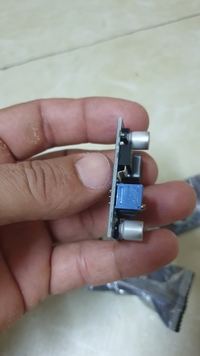
Will bu używany w przyszłości ze starymi zasilaczami PC do napięć zmiennych. Przetestowałem go zasilaczem i zmierzyłem napięcie wyjściowe. Wejściówka wynosiła 7.2 Voltów. Użyłem mocy wyjściowej powyżej 25 V do 1,5 Volt. Trymer do napięcia wyjściowego jest niezwykle czuły (10 potencjał obrotów), dzięki czemu można łatwo ustawić dokładne napięcie. Napięcie wejściowe powinno wynosić 5 Volt lub wyższe dla stabilnej wyjścia.
KomentarzePokaż oryginał -
27/09/2020
To takie miłe
KomentarzePokaż oryginał -
 wgc4VIP1US19/02/2017
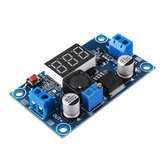
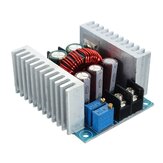
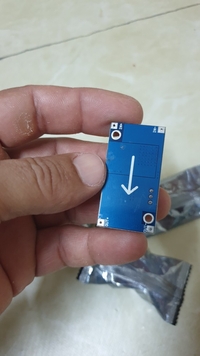
I ordered three of these modules. I had never used them before, so I hooked them up to a basic adjustable power supply and measured the output while I made adjustments to the trimpot. I was having problems with the output voltage on the first one I tested, where it wouldn't go below 9.5V, even with a 5V input (I needed 3.3V). The step-up still seemed to work fine. I tried to figure out which component failed, but I never did. I even removed the trimpot for testing and resoldered a couple of surface mount resistors. I tested the second one, and it worked fine. I tested the third one, and it worked fine, but while I was adjusting the trimpot, I encountered the same problem and it jumped up to 9.5 V. I think this was probably due to an error on my part. I think that my alligator clip probably slipped and shorted something out. This also led me to believe that I probably killed the first one in the same manner. My advice is to be very careful when using this module, and to solder wires in place before testing. In my case, I feel that the error was on my part, and I will be ordering some more in the future, since they are inexpensive. Also, the circuit boards on all of mine were misprinted as part DSN600AUD instead of DSN6000AUD. Other than that, they are identical to the one in the picture.
KomentarzePokaż oryginał -
02/12/2020
Krok w dół DC do prądu stałego. Działa dobrze w przypadku małych ładunków, takich jak wentylatory, małe silniki prądu stałego lub inne urządzenia elektroniczne. Podoba mi się w moich projektach DIY.
KomentarzePokaż oryginał -
25/08/2018
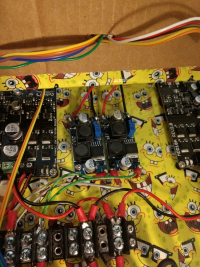
With a 12V power supply I achieve 1.75V to 47.5V output range, pretty good for the size and can easily be incorporeted inside any electronic project
KomentarzePokaż oryginał -
JoscheVIP1DE21/06/2017
Device arrived set to 20V output. Left turn Driving a small 19V load from a USB power bank is no problem. If a more powerful source is used and the load uses more power, the temperature can rise quickly. Keep an eye on the power throughput.
KomentarzePokaż oryginał -
Trev20VIP1AU18/04/2017
Converters work as described. Good price.
KomentarzePokaż oryginał -
burnsheepJP27/12/2016
All worked normally.
KomentarzePokaż oryginał -
19/06/2019
They work great, I was impressed by the resolution of the trimpot and consistency of the voltage output. They have a wide range of input and output voltages and the current is enough for many applications.
Komentarze (1)Pokaż oryginał





Show:
Możesz być zainteresowany
-
 US$12.64
 -
US$10.99
-
US$7.99
Geekcreit® 400W Moduł zasilania DC-DC o stałym napięciu i prądzie zwiększającym moc
-
US$19.62
5 szt. Moduł zasilania DC-DC 3V-35V na 4V-40V z regulacją napięcia. 3V 5V 12V na 19V 24V 30V 36V
-
US$42.72
-
US$7.99
-
US$7.99
-
US$24.99
-
US$58.99
-
US$5.76
Geekcreit® 5A XL4005 Moduł regulowanego przetwornika zasilania DC-DC Step Down
-
US$18.65
-
US$7.99
-
US$85.99
-
US$4.99
Moduł zasilacza LED DC7V-35V do DC1.25V-30V z ładowaniem prądu stałego o zmiennej napięciu zejścia
-
US$34.64
5 sztuk AC 100-240V na DC 12V 5A 60W Moduł zasilacza przełącznika Driver Adapter LED Strip Light
-
US$9.99
-
US$7.58
-
US$8.99
-
US$6.59
-
US$16.09
-
US$17.31
-
US$19.54
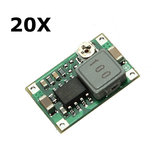
20szt. Mini Moduł MP1584EN DC-DC BUCK Zmieniacz Napiecia 4.5V-28V Wejście 0.8V-20V Wyjście
-
US$8.99
-
US$79.99
-
US$6.99
Moduł przekształtnika CC CV DC-DC na obniżanie napięcia zasilania 7-32V do 0,8-28V 9A
-
US$6.99
-
US$11.99
2 szt. Przetwornica zasilacza prądu stałego 100-240V na prąd stały 12V 5A 60W do taśmy LED
-
US$9.19
Moduł zasilacza DC-DC 12V na 3.3V/5V/12V z wielokrotnym przekształtnikiem napięcia wyjściowego
-
US$74.99
-
US$24.24
-
US$29.99
-
US$13.99
DC 600W 10-60V do 12-80V Przetwornica podnośna Moduł zasilania
-
US$26.99
-
US$8.96
-
US$7.99
-
US$9.19
5 Sztuk Miniaturowy Moduł Zasilania Prądu Stałego z Regulacją Napięcia Moduł Redukcji Napięcia
-
US$31.04
10 sztuk układ regulacji napięcia LM2596 DC-DC z regulacją kroczącą zasilania z wyświetlaczem
-
US$40.24
Geekcreit® Wejście AC 110-240V na DC 24V 17A 400W Płyta zasilająca z przełącznikiem
-
US$10.34
-
US$9.99
-
US$16.09
20 szt Mini moduł zasilający prądu stałego z regulacją napięcia moduł step down
-
US$6.99
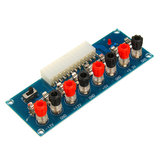
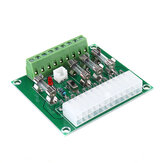
ATX Zasilacz ATX Komputerowa Płyta Zasilania DC Wtyczka +3.3V +5V -12V +12V +5V
-
US$22.99
-
US$14.99
-
US$4.59
-
US$76.99
RIDEN® AC110V/220V na DC 68V 1200W Regulowane zasilanie impulsowe dla RD6018
-
US$12.99
5szt. Regulator napięcia LM2596 DC-DC z regulacją, moduł zasilania step-down z wyświetlaczem
-
US$68.99
RIDEN® dla RD6012P RD6012PW 65V 800W Przetwornica zasilania przełączająca zasilacz AC/DC
-
US$7.99
-
US$21.93
3 szt. Zasilacz przetwornikowy AC 100-240V na DC 12V 5A 60W Moduł zasilacza do taśmy LED


recommendation for you
-
US$6.99
-
US$4.99
-
US$6.99
-
US$9.99
-
US$3.14
-
US$6.49
-
US$16.09
-
US$7.99
-
US$4.59
-
US$11.49
-
US$5.99
-
US$96.59
-
US$30.99
-
US$38.00
-
US$7.99
-
US$94.99
-
US$11.49
-
US$21.93

.jpg)